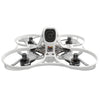
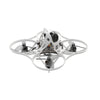
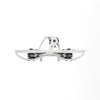
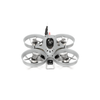
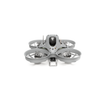
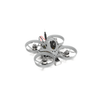
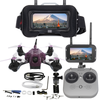
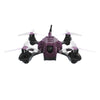
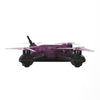
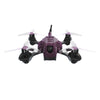
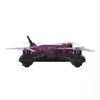
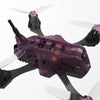
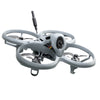
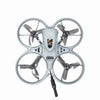
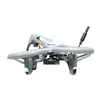
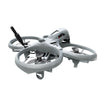
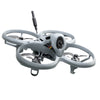
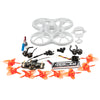
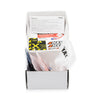
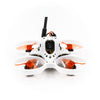
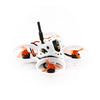
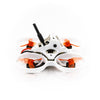
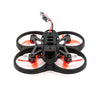
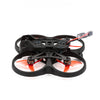
Emax Tinyhawk Nanoscout Pro – ELRS 2.4GHz BNF Micro Whoop FPV Drone

Product Code:

Availability:In stock

$129.99

Available Options

Qty

EMAX Tinyhawk Nanoscout Pro 65mm BNF micro whoop FPV drone in flight

BNF performance for indoor lines, tight gaps and everyday stick time

65mmWhoop wheelbase
20gAnalog dry weight, approx.
152gCombined max thrust
400mWMax analog VTX output

The Nanoscout, upgraded

Small enough for the hallway. Serious enough for your thumbs.

The EMAX Tinyhawk Nanoscout Pro is a 1S brushless BNF micro whoop built for pilots who want more than a starter toy. A reinforced 65mm ducted frame, 0702 27000KV ball-bearing motors, plug-in motor connections and an adjustable FPV camera deliver a compact platform that is easy to own, quick to repair and rewarding to progress with.

Choose Analog for lightweight, low-latency value or HDZero for a sharper digital FPV feed. Both versions include an ExpressLRS 2.4GHz receiver and arrive assembled - bind, verify your setup and fly.

Choose the feed you already fly

Analog or HDZero?

The flight platform is shared, but the camera, video transmitter, controller hardware, weight and expected hover time differ. Match the video option to your goggles before adding to cart.

Analog

Light, familiar and latency-first

  • Approx. 20g without battery / 28.9g with supplied battery
  • STM32G473CEU6 5-in-1 AIO with integrated 4-in-1 6A ESC
  • EMAX E02 analog camera
  • 5.8GHz 40-channel VTX: 25 / 100 / 200 / 400mW
  • Approx. 4-minute hover time under stated test conditions
HDZero

Digital clarity in the same 65mm format

  • Approx. 22.7g without battery / 31.6g with supplied battery
  • STM32F411 5-in-1 AIO with integrated 4-in-1 5A ESC
  • HDZ3261 camera and integrated HDZero video transmission
  • Selectable 25 / 200mW video output
  • Approx. 2:48 hover time under stated test conditions
Fast rule: if your goggles receive standard 5.8GHz analog video, choose Analog. If your setup receives HDZero, choose HDZero.

Why the Pro earns the name

More performance. Less bench time.

01 / CONTROL

27000KV brushless power

Four 0702 ball-bearing motors and 31mm Avia propellers produce up to 152g combined maximum thrust for quick recoveries and confident indoor acceleration.

02 / COMPUTE

Purpose-built 5-in-1 AIO

Flight controller, ESC, receiver and video hardware are consolidated into a compact board, reducing wiring and centralizing the electronics.

03 / DURABILITY

Full ducts, reinforced frame

Full-coverage prop guards and a strengthened airframe are designed for close-quarters flying where walls, furniture and gates are part of the line.

04 / SERVICE

Plug-in motor connections

Connectorized motors simplify swaps and help get the quad back in the air with less repair interruption.

05 / VIEW

Adjustable camera angle

Tune the camera angle to your pace - from controlled practice to faster, more committed indoor lines.

06 / LINK

ELRS 2.4GHz control

A built-in ExpressLRS receiver provides the radio ecosystem many current FPV pilots already use. Match firmware and binding settings before flight.

Protected, integrated, adjustable

A whoop designed for proximity flying

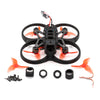
The most useful product story is the one you can see: full prop coverage, a strengthened frame, adjustable camera mounting and an integrated electronics stack.

Tinyhawk Nanoscout Pro frame, prop guard, camera angle and 5-in-1 AIO feature diagram

Feature graphic shows the Analog configuration. Refer to the comparison and specifications below for HDZero differences.

Power-to-weight, made visible

Four motors. Up to 152g combined thrust.

The supplied specification sheet lists 38g maximum thrust per motor, totaling 152g across four motors. That distinction is stated here explicitly so pilots can compare the platform accurately.

Close-up of Tinyhawk Nanoscout Pro 0702 27000KV ball-bearing motor and 31mm Avia propeller

Low-latency analog option

See the gap. Commit to the line.

The Analog version pairs the EMAX E02 camera with a 5.8GHz adjustable-power video transmitter for the immediate response and broad goggle compatibility analog pilots expect.

EMAX E02 analog FPV camera installed on the Tinyhawk Nanoscout Pro

Analog variant shown. HDZero uses different camera and video hardware.

Designed to keep flying

Quick motor swaps. 1S simplicity.

Plug-in motor leads reduce soldering during routine motor replacement. The supplied 1S 320mAh battery keeps the system compact; the Analog configuration is rated for approximately four minutes of hover time under full-charge test conditions.

Tinyhawk Nanoscout Pro plug-in motor connectors and 1S 320mAh battery

Actual flight time varies with throttle use, battery condition, tune, environment and video-system variant.

Independent perspectives + flight footage

Watch before you bind.

"A whoop that might actually last"Nick Burns - video title

Official introduction

EMAX presents the Nanoscout platform and its compact indoor-FPV concept.

Nick Burns

A durability- and ownership-focused look at the Nanoscout Pro.

Drone Camps RC

Review and flight footage that lets shoppers see the 1S whoop in motion.

UAVfutures

A beginner-oriented discussion of FPV cost, complexity and the updated Nanoscout Pro.

Verified variant specifications

Know exactly what you are choosing.

Specification Analog HDZero
Wheelbase 65mm 65mm
Maximum dimensions 84 x 84 x 35mm 84 x 84 x 35mm
Weight without battery Approx. 20g Approx. 22.7g
Weight with battery Approx. 28.9g Approx. 31.6g
Motor 0702 27000KV brushless, ball bearing 0702 27000KV brushless, ball bearing
Propeller Avia 31mm translucent Avia 31mm translucent
Maximum combined thrust 152g 152g
Flight controller STM32G473CEU6 STM32F411, 100MHz
ESC Integrated 4-in-1 6A Integrated 4-in-1 5A
Receiver Serial ELRS 2.4GHz SPI ExpressLRS 2.4GHz
Video system 5.8GHz analog, 40 channels; 25/100/200/400mW HDZero; 25/200mW
Camera EMAX E02, approx. 1.3g HDZ3261, approx. 2g
Battery 1S 320mAh 1S 320mAh
Approx. hover time 4 minutes 2 minutes 48 seconds

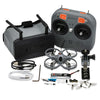
Included on the current listing

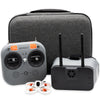
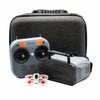
  • 1x Tinyhawk Nanoscout Pro BNF, selected video variant
  • 1x 1S 320mAh battery
  • Avia 31mm propellers, pre-installed

You still need

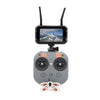
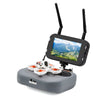
  • ExpressLRS 2.4GHz radio transmitter
  • Analog or HDZero receiving goggles matching your selected variant
  • Appropriate battery charging workflow and spare packs for longer sessions

Performance figures are manufacturer specifications or lab estimates. Actual results vary with battery condition, firmware, tune, equipment, environment and flying style. Follow local regulations and safe FPV operating practices.

Buyer questions, answered

BNF without the guesswork.

Is the Tinyhawk Nanoscout Pro ready to fly?

It is a bind-and-fly drone, not a complete ready-to-fly kit. The aircraft is assembled, but you need an ExpressLRS 2.4GHz radio and video goggles compatible with the selected Analog or HDZero variant.

Which version should I choose: Analog or HDZero?

Choose Analog for standard 5.8GHz analog goggles and the lightest, longest-flying configuration. Choose HDZero only if you already have - or plan to use - an HDZero receiving setup and prioritize a clearer digital image.

Is this a good beginner FPV drone?

It is a strong first BNF whoop for a buyer who already understands radio and goggle compatibility. Full prop guards, 1S power and a compact indoor format are beginner-friendly, while the brushless power and adjustable camera angle leave room to progress.

What changed for the Pro model?

The supplied product materials highlight a strengthened frame, adjustable camera angle, plug-in motor connections, ball-bearing 0702 27000KV motors and a more integrated electronics package. The Analog model also moves to an STM32G473CEU6 controller.

Can it fly outdoors?

Yes, in suitable calm conditions and within local rules, but this 65mm 1S whoop is optimized for indoor freestyle, close-proximity lines and compact spaces. Wind will affect a drone this small more than a larger quad.
How long does it fly?

The manufacturer workbook lists approximately four minutes of hover for Analog and two minutes 48 seconds for HDZero with a fully charged 1S 320mAh battery. Real freestyle flight time depends heavily on throttle use and battery condition.